Capital Planning
Fire department capital planning: see what's coming, plan for it now.
Build a multi-year view of apparatus, equipment, facilities, and personnel needs — costs, timelines, and funding status, together.
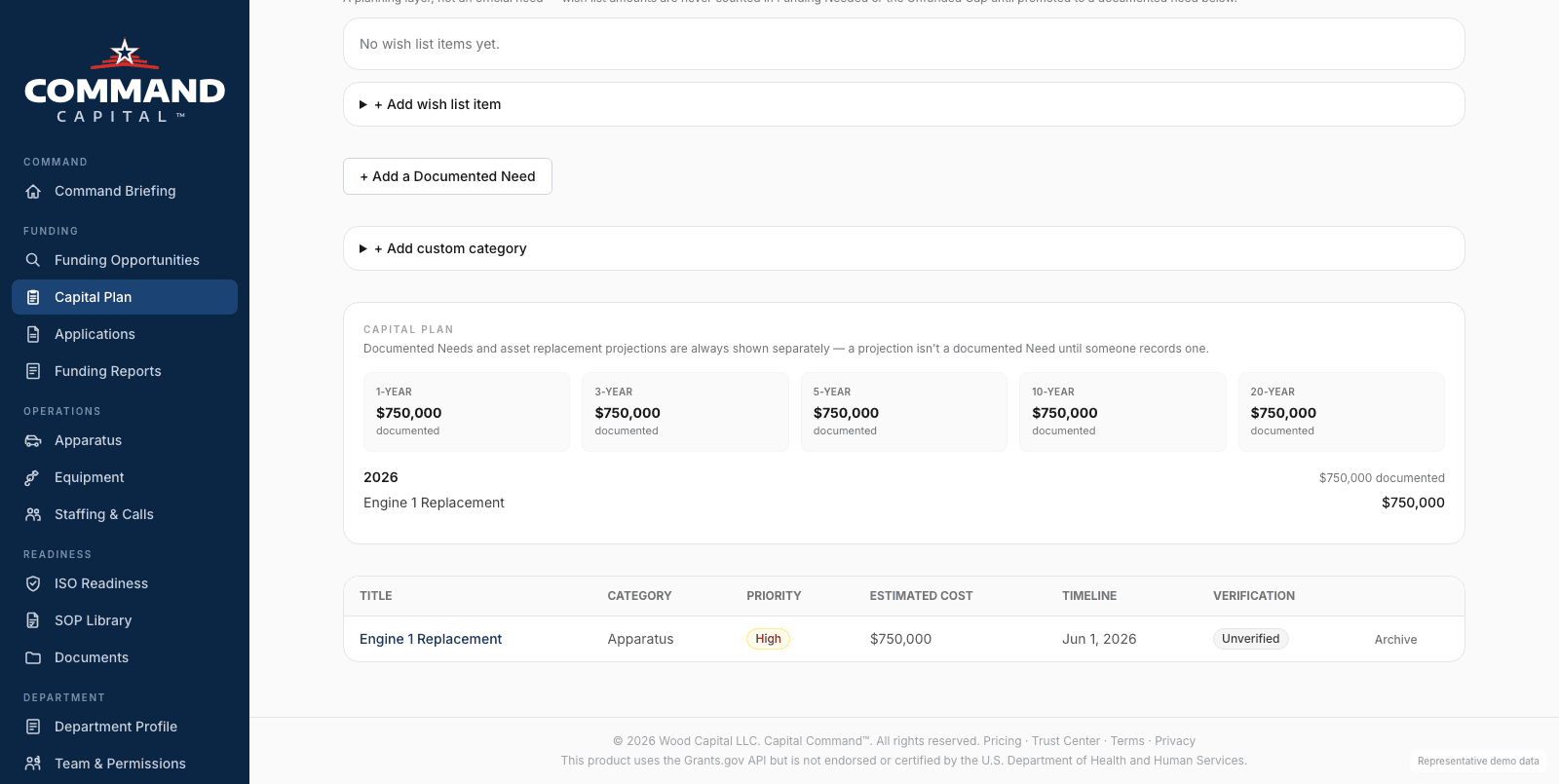
Sample from a fictional demonstration department. No email required.
Documented needs and projected replacements, side by side
A capital need someone has written up and a projected apparatus or equipment replacement are always shown separately. A projection isn't a documented need until someone records one.
Costs and timelines across multiple years
See what's coming due next year, and what's five or ten years out, organized by year, not buried in a single flat list.
The funding gap, tracked honestly
Secured, pending, and potential funding are always shown separately and never combined into one number, so the remaining gap on a need is always a real, defensible figure.
Built for the conversation with leadership
The same plan that organizes your department's capital needs is the plan you bring to the board or council.
Fire apparatus replacement planning
Engines, tankers, ambulances and rescues wear out on schedules you can predict. Capital Command records each unit's year, condition and repair history, scores it for replacement with every factor shown, and projects when it will come due and what it will cost — years before the purchase, while there's still time to plan the funding. Long apparatus build times make that lead time matter more than ever.
Equipment replacement: SCBA, turnout gear, radios and more
The same planning applies to the equipment that retires on a fixed clock: SCBA and cylinders, structural turnout gear, portable and mobile radios, cardiac monitors and tools. Each item's replacement year and cost sits in the same multi-year view as apparatus and facilities, so nothing large surprises the budget.
A capital improvement plan your council can act on
Capital Command turns documented needs and projected replacements into a year-by-year capital improvement plan (CIP): what's due, what it costs, what's already funded, which grants are being pursued, and the remaining gap. It's the format finance directors and councils expect, and it stays current as costs, timelines and grant results change. See the sample capital improvement plan above, built from a fictional demonstration department.
Fire department budgeting, connected to funding
- Secured, pending and potential funding are always tracked separately, so the funding gap is a defensible number.
- Multi-year forecasting (3- and 5-year) and the Budget Builder for annual operating and capital budgets are included in Professional.
- Council-ready reports and presentations come from the same data, so the plan you manage is the plan you present.
- Municipal Command gives city managers and finance directors one consolidated view across every department — see Municipal Command for city and county leaders.
Related guides
- Fire department capital improvement plans (CIP)
- How to build a fire department capital plan
- Apparatus replacement planning: when to start
- Grants and funding to purchase a fire truck
- Equipment replacement funding and capital budgeting
- Presenting a capital plan to your board or council
- How to fund SCBA replacement